



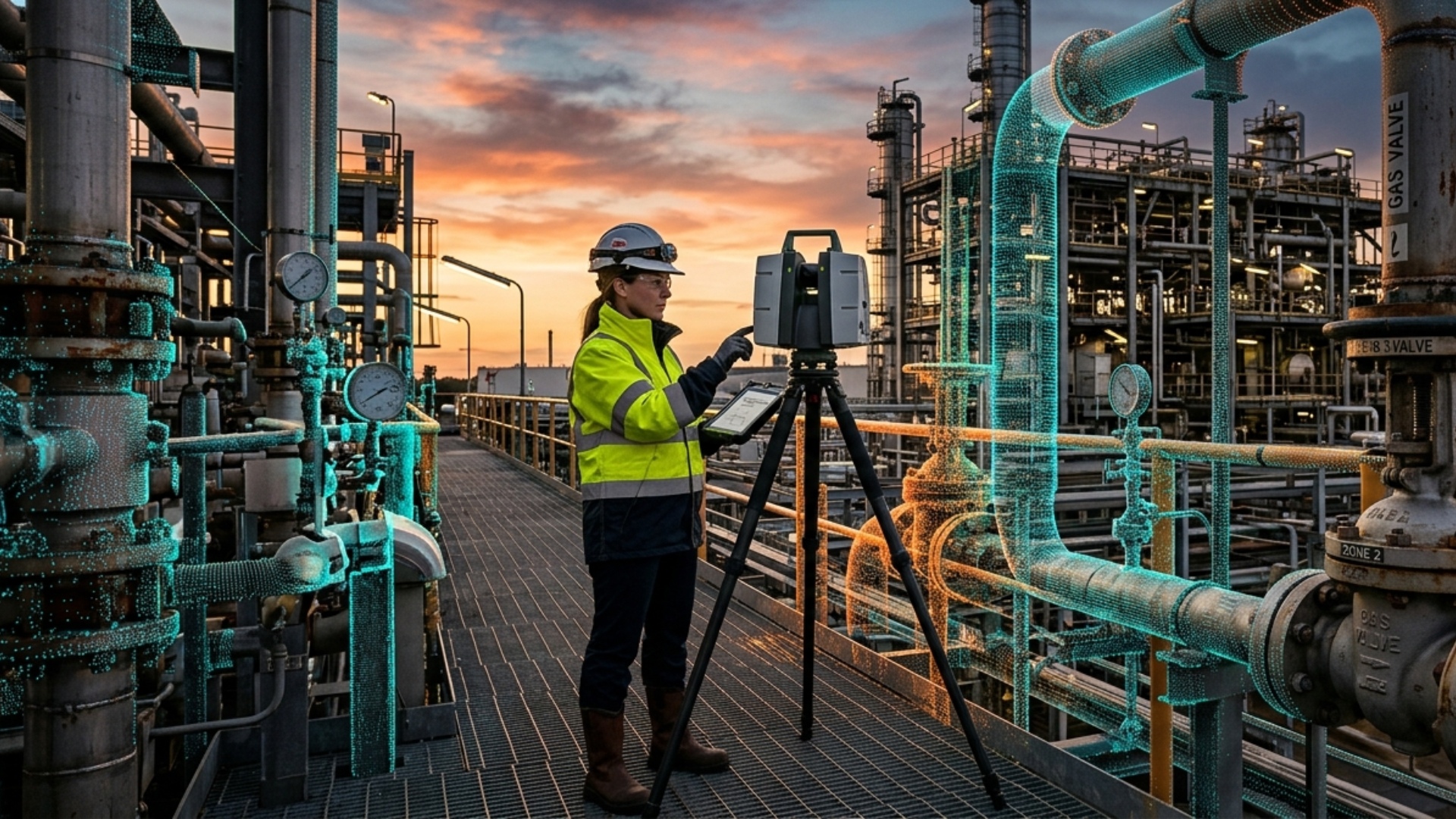
Out here, where oil and gas shape much of how energy moves, getting things right matters more than almost anywhere else. Not just because mistakes cost time – but because they can shift outcomes in ways few expect. Facilities like refineries or rigs aren’t built light; they stack layer after layer of pipes, machines, frames – each piece needing exact records to keep operations steady. Over years, keeping track used to mean drawings, notes, guesswork at times. Now lasers map every curve, gap, bolt with a kind of clarity once thought impossible. What was once slow, scattered effort now becomes precise digital twins – all without stepping into danger zones. Change didn’t arrive loud – it slipped in through beams of light.
Now machines can map huge factories fast – light beams bounce off walls, floors, ceilings, recording every curve. These scans turn into exact copies inside computers, built point by point. Workers who run plants pull up those replicas when planning changes or fixes. Mistakes happen less often once teams see how pieces fit before touching metal. Time slows down during repairs; these models help speed things back up. People stay farther from danger because risks show up on screens first.
This short look shows what happens when 3D Scanning Services meets oil and gas work, shifting old methods with new tools. Firms across the sector now watch closely, drawn by gains possible through digital capture instead of traditional surveys.
Table of Contents:
Three dimensional laser scanning explained
Out there, a fast-moving beam leaps across surfaces, gathering countless tiny measurements every instant. This method builds snapshots of real spaces using those gathered dots floating in digital air. Instead of sketches or guesses, machines shape precise outlines based on actual surroundings. From chaos emerges order – shapes form, edges align, volumes take place. These forms turn into usable blueprints, not imagined but recorded. Each model stays true to what exists, down to the smallest detail caught mid-moment.
Out in oil and gas operations, setups keep shifting – detailed Professional 3D Scanning Services In Malaysia capture what standard surveys often miss. Complex networks grow over time; precise digital models track those changes reliably.
Oil and Gas Operations Rely on Precise Digital Records
Out there, where pipes snake through steel skeletons and heavy tanks sit bolted into place, keeping things running smooth takes more than routine checks. Think about it – when blueprints haven’t changed in years while equipment keeps upgrading, confusion grows fast. One wrong valve position, one missing update, and suddenly access routes don’t match floor plans anymore. Behind the scenes, paperwork gaps turn small tasks risky. Imagine trying to fix what you can’t fully trace. Old files pile up, new changes get lost, clarity fades over time. Sooner or later, someone works blind on critical gear because history wasn’t tracked right. That gap between real life and paper trails? It widens every day updates stall
- Plant Upgrades
- Maintenance
- Safety Inspections
- Equipment Installations
- Expansion Projects
Out in the field, Affordable 3D Scanning Services Malaysia helps gather precise measurements across oil and gas sites. With each sweep, it builds a clear digital picture of every part of the plant. Instead of rough estimates, teams get dependable data straight from the environment itself. This method tracks complex structures without missing key details. Because the scans are so exact, they reduce guesswork later on. As work progresses, these models stay useful through different project stages.
3D laser scanning helps oil and gas sites capture detailed shapes and spaces quickly
1. High-Precision Measurement
From a single beam, precision unfolds – one point at a time, down to the last millimetre. When updates loom, those numbers become the backbone engineers trust instead of guesswork.
2. Faster Data Collection
Hours shrink when old-school measuring gives way to 3D Scanner Malaysia. A job that once tied up crews for weeks now wraps by lunchtime. Whole halls – any size – snap into digital view fast. Less waiting means plans move without delays. Workers grab what they need, right when they need it.
3. Workers safer now
Hidden risks live inside oil and gas sites – tight rooms, pressure-packed pipes. From a distance, scanners map every corner using 3D Laser Scanning Malaysia instead of sending people in. Workers stay clear of harm because machines do the measuring. Precision stays high when digital eyes replace footsteps.
4. Better Maintenance and Asset Management
From laser scans, digital copies help firms keep closer tabs on their gear. When problems pop up – say, a crooked machine part or shifting pipes – engineers spot them fast, all from afar. Fewer trips to the location mean less downtime catches everyone off guard. Predictions about repairs get sharper when data flows steadily, quietly changing how upkeep unfolds.
5. Accurate As-Built Documentation
Most buildings change a lot through the years, yet old plans rarely show what is actually there. With 3D scanning, exact digital copies pop up fast – this gives engineers real details before they tweak or rebuild anything.
3D Laser Scanning Uses in Oil and Gas
Plant Upgrade and Growth
Inside any upgrade project, exact dimensions matter most – without them, mistakes grow fast. From wall corners to ceiling heights, laser tools capture every detail clearly. Instead of guessing space limits, teams work from real-world numbers collected instantly. With reliable scans, layout changes become quicker, less risky too.
Pipeline and Equipment Layout Records
Pipes twist through factories in tangled webs. Where each one sits gets recorded by laser beams, spotting every joint, valve, and machine part precisely. This snapshot guides builders when they design what comes next.
Offshore Platform Documentation
Hard to reach offshore sites pose big measurement challenges. Yet using 3D laser scanning in oil and gas operations changes that – capturing platform details fast, turning them into precise digital replicas. These models support checks and upkeep without slowing down work.
Safety Planning and Risk Analysis
Starting with a digital version, teams test how people might escape during emergencies. Instead of walking through dangerous spots, engineers study the building design on screen. Sometimes it rains when they work, yet their tools stay dry indoors.
Combining 3D laser scanning and building information modeling
From a different angle, laser scanning pairs well with BIM modeling services in India. Because scans produce point cloud data, these dots become the base for precise BIM models. Starting mid-thought, it’s clear that raw scan info transforms smoothly into structured digital replicas. Not always obvious, but each scanned detail feeds directly into model accuracy. Through this path, design teams gain clarity without extra guesswork. Even so, the real shift happens when static data turns interactive. Without delay, workflows adapt as models update alongside new scans.
These models help project teams:
- Visualize facility layouts
- Plan maintenance tasks
- Design equipment upgrades
- Coordinate engineering teams
Working together gets easier when teams share building data, which cuts down on missed deadlines. A single model helps different groups stay aligned without waiting around for updates.
Companies Use 3D Laser Scanning More Often Now
Faster tools shape how energy work gets done now. Machines talk to each other more often these days. Old ways slow things down too much. Smart systems track equipment without constant checking. Changes happen step by step across the field. Tech updates help avoid long delays. Workers notice fewer surprises in daily tasks. Systems learn patterns over time. Details matter more than before. Digital shifts support steady progress behind scenes.
Companies are increasingly adopting 3d laser scanning for oil and gas because it offers:
- Highly accurate measurements
- Reduced operational risks
- Faster project execution
- Improved documentation
- Better collaboration between engineering teams
Because 3D scanning works well, companies find better ways to run things without risking how safe or smooth it goes. Operations shift quietly when digital models show what’s really happening behind the scenes.
Edge 3D Technologies in oil and gas project support
Out front in India, Edge 3D Technologies runs deep into high-precision scanning work. Tough spaces? That’s where their gear performs best. Precision mapping shapes up clearly when conditions get messy. Not every firm handles tight spots well – this one does. Heavy industries rely on its steady digital capture methods. Advanced tools meet real-world chaos here. Complexity doesn’t slow them down – it fits their rhythm.
Our services include:
- Industrial facility scanning
- Pipeline and equipment documentation
- Point cloud processing
- BIM Modeling Services in India
- Plant records showing how things were actually built
Fine details emerge when high-tech scans meet smart design methods. Oil and gas teams work better because of it. Precision climbs. Risk drops. Jobs move faster than before.
Conclusion
Out in the field, clear records matter just as much as solid numbers when running big oil and gas sites. Old-style measuring often falls short on precision needed today. Because of that, teams now lean more on Malaysia 3D Scanning Service instead of just tape measures or maps. These scans build sharp virtual copies quickly, cutting down time spent onsite while reducing risk. From planning to daily work, digital replicas shape how systems are handled underground and above. Change moves fast through energy sectors, pushing tools like scanning further into everyday use. Better speed, tighter budgets, fewer hazards – those come from models built in pixels, not paper, connect with us.
FAQs
1. What is 3D laser scanning for oil and gas?
Starting with lasers, it maps out factories down to the smallest detail. These scans turn into digital copies, useful when fixing things or designing changes. Instead of guessing, teams rely on exact shapes captured in 3D. From upgrades to repairs, the models guide decisions clearly. Built on real data, they support work across different stages of a project.
2. Why is laser scanning important in oil and gas facilities?
From every angle, laser scanning captures precise details of plants, pipes, and machinery. This clarity allows engineers to organize repairs or improvements without guesswork. Efficiency grows when measurements are reliable.
3. What level of precision does 3D laser scanning offer?
Out of today’s tools, laser scanners stand out by hitting precision down to each single millimeter. Their readings hold up solid when used in real-world engineering tasks.
4. What is a point cloud in laser scanning?
Millions of tiny measurements form a shape when recorded by the device. These dots map what the eye sees, one spot at a time. Each position locks into place like stars in a night sky. The scanner builds it without guessing, just precision. What results looks real because it mirrors reality exactly.
5.Can laser scanning reduce project costs?
Fine details matter. With precise data from laser scans, teams avoid mistakes that slow down progress on complex builds. Mistakes cost time – this tool keeps things moving smoothly.
6. How long does it take to scan an industrial facility ?
How long it takes to scan depends on how big the place is – sometimes just hours, sometimes stretching into days.
7. Is laser scanning safe for hazardous environments?
Fine. Workers stay clear of risky zones because laser scanners gather information from a distance.
8. How does laser scanning support BIM modeling?
From laser scans, point clouds take shape as BIM models – giving engineers clear views for planning facility updates. Instead of guessing, they work from precise digital replicas built straight from scan data.
9. What industries use 3D laser scanning besides oil and gas?
Besides these fields, construction leans on 3D laser scanning just like marine engineering does. Manufacturing follows a similar path, relying on the same method. Infrastructure projects apply it too, though quietly. Heritage work uses the tech, often behind the scenes. Each area finds its own way to adapt the tool.
10. How often should facilities update their digital documentation?
Every time changes happen, facilities need to refresh their records so engineers use the right info. When updates roll in, paperwork must shift too – keeps everything aligned. Outdated notes lead to mistakes; fresh docs prevent that. Whenever a system gets tweaked, written details follow close behind. Accuracy sticks around only if documents move at the same pace as improvements do. Missed edits in files risk confusion later on. Keeping pages current means teams stay on track without hiccups.
