



Back in the 1980s, early commercial 3D printers relied on plastic polymers – since then, these materials have stayed central to the field. Though other options exist now, 3D Printing Plastic Service still show up more than almost anything else. One reason? They work across nearly every method out there. Take Sheet Lamination – it handles plastic just fine. Then there is Material Extrusion, like FDM or FFF; those depend heavily on melted filament fed through a nozzle. Even techniques such as Material Jetting manage well with liquid photopolymers dropped layer by layer. Binder Jetting uses powdered base material, yet often binds it using agents compatible with certain thermoplastics. With Vat Photopolymerization, resins cure under light, forming precise shapes easily. Powder Bed Fusion also joins particles together using heat, commonly applied to nylon powders and similar synthetics.
Even so, how the plastic ends up looking or being used can shift based on the method involved. Take material extrusion in 3D printing – it relies on strands of plastic to build models. On another path, some producers choose powder-based techniques like bed fusion processes instead. One version, known as HP Multi Jet Fusion, works with fine plastic dust, bringing better control, precision, durability, and consistency in output.
Starting with heat, the plastic – either string-like or fine grains – turns soft enough to stick in thin sheets until it becomes a shape. Depending on how much warmth and speed used while building, each kind of material acts differently when cooling down after forming. The result changes based on what plastic runs through the machine.
Here’s how it breaks down: answering what kind of plastic shows up in Plastic 3D Printing Service In Malaysia means looking closely at everyday options – one material leads into another, each suited for different builds. Instead of listing them flatly, imagine stepping through HP’s lineup, where variety shapes function. Every choice connects to purpose, not just preference.
Table of Contents:
Thermoplastics Used In HP 3D Printing
More choices now exist in HP’s line of thermoplastics. Built specifically for HP Multi Jet Fusion, these 3D printing substances push what functional components can do. Cost efficiency improves alongside better output quality. Yet they still manage to offer strong recycling rates – often top in their class – all without raising unit price. Beyond familiar options like PA 11, PA 12, and PA 12 GB, something new has arrived. From a partnership with BASF comes HP 3D High Reusability Polypropylene. This one stands out as the most economical pick across HP’s range. It runs steadily over repeated uses, even when leftover powder gets reused entirely. Then there are bendable kinds too – one made with help from Evonik named HP 3D High Reusability TPA. These create soft yet light structures. Bounce-back ability increases. Uniform results show up part after part.
Other Plastics Used In Additive Manufacturing Include:
ABS Plastic Used In 3D Printing
One reason Abs Plastic 3D Printing Service Malaysia became common? It had already made its way into factories before 3D printing took off. This plastic shows up most often as a ready-to-feed filament – simple to work with. Yet you might also find it ground into fine powder, especially for laser-based sintering methods. Cost plays a role too; few materials match its balance of price and availability. Because older production lines knew it well, stepping into new tech felt less like starting over, more like shifting gears.
Starting out, ABS stands apart because it comes back again and again – no need to toss it after one go. This stuff shows up in plenty of shades, fitting neatly into different design needs. Tough jobs? No problem. High heat? Handled without fuss. Chemical welding opens another path for joining pieces together. Watch out though – it won’t break down naturally over time. While printing, sharp smoke might rise, so keeping things sealed inside a closed chamber makes sense. Warping sneaks in when the base stays cold; warmth underneath keeps shapes steady. Often found in compact forms, you’ll spot these bits inside vehicles or tucked within electronic gear.
Polylactic Acid PLA In 3D Printing
Most people pick PLA for one clear reason – it breaks down naturally over time. This happens since makers grow its base stuff from plants like corn. While working well in home 3D printers, the material can pull inward just a bit when cooling. Instead of needing extra heat underneath, it sticks fine on cool surfaces. Printing runs smoother at temps ranging from 190ºC up to 230ºC. Not every plastic behaves this way, especially not ABS.
Food wrappers often come from this stuff, along with dissolvable tools doctors leave inside patients. Printing layers? This material behaves nicely – simple handling helps. Grown from plants instead of oil keeps it different. You’ll find it dyed every which way too. Sometimes poured like liquid, sometimes fed as string – it adapts without fuss.
Still, working with PLA gets tricky since it cools fast. Because of how quickly it hardens, shaping takes more effort. Sunlight exposure limits its uses, making some outdoor cases problematic. Moisture brings another issue – it can start breaking down if wet.
Acrylic Styrene Acrylonitrile In 3D Printing
One step beyond ABS, ASA handles sunlight much better while keeping solid toughness and stability under heat. A warm base helps avoid edges lifting during prints, just like you’d do with ABS. Instead of open setups, keep things fully enclosed – this keeps fumes from escaping since burning styrene can be risky. Settings stay close to those for ABS, though attention shifts toward safety thanks to the vapors released mid-print.
Polyamides Nylon In 3D Printing
White powder polyamides – often called nylon – are suited for Powder Bed Fusion methods. Meanwhile, filament versions work within fused deposition modeling setups.
Most polyamides contain partly crystalline formations, giving them strong resilience along with decent strength under stress while staying flexible when needed. Their ability to resist wear shows up clearly in long-lasting performance even under sudden force. Because they handle so many physical demands well, these materials appear often in fields like machine parts, robotic systems, flight components, vehicle design, and health care tools. The way HP builds objects using jets of material includes several types of such plastics, which also allow nearly all unused powder to be used again later.
Polyethylene Terephthalate PET PETG In 3D Printing
PET, much like Nylon, pops up often as a go-to plastic. Thermoforming leans on it heavily. Glass fibers sometimes join it, building tougher resins. Mixing plays well here, letting strength rise through material partnerships.
PETG – what you get when glycol alters regular PET – shows up often in 3D printing jobs. Instead of traditional PET, most people pick this material for FDM or FFF machines because it withstands stress better, looks more transparent, handles easier during printing runs. Though similar at first glance, its toughness makes it stand out from the original form every time.
Smooth and clear, this material shows up often in making water bottles because it resists moisture well. Printing at temperatures from 75 to 90ºC works best when working with PET. Sold most times as a see-through filament, including types like PETE and PETT, one nice trait stands out – almost no smell comes out while printing.
Polycarbonate (PC) In 3D printing
When things get hot, polycarbonate holds up well – staying strong even near 150ºC. This tough plastic suits serious mechanical jobs, built for demanding uses. Moisture sneaks into it easily, though, if left out in the open air. Performance drops when dampness gets inside before printing begins. Because of that quirk, sealed storage isn’t optional – it’s necessary. A tight container keeps it ready, reliable, and stable over time.
Known for being tough yet clear, this stuff works well where light needs to pass through without adding weight. Because it weighs less than glass, creators often pick it when crafting lenses, shields for devices, or eye-catching displays. Its blend of resilience and see-through quality makes it fit neatly into roles where regular glass might be too heavy or fragile.
High-Performance Polymers For 3D Printing
Polymer threads that perform highly now match metal traits under certain conditions – this shift arrived through 3D printing’s growth. Yet strength like steel emerges not from alloy but layered plastic built gradually. Some parts once cast or forged get replaced without losing function. Where force matters, these materials hold up far better than expected. Progress here didn’t come fast, yet it changed what feels possible in fabrication. Each advance slipped quietly into prototypes first, then real-world use.
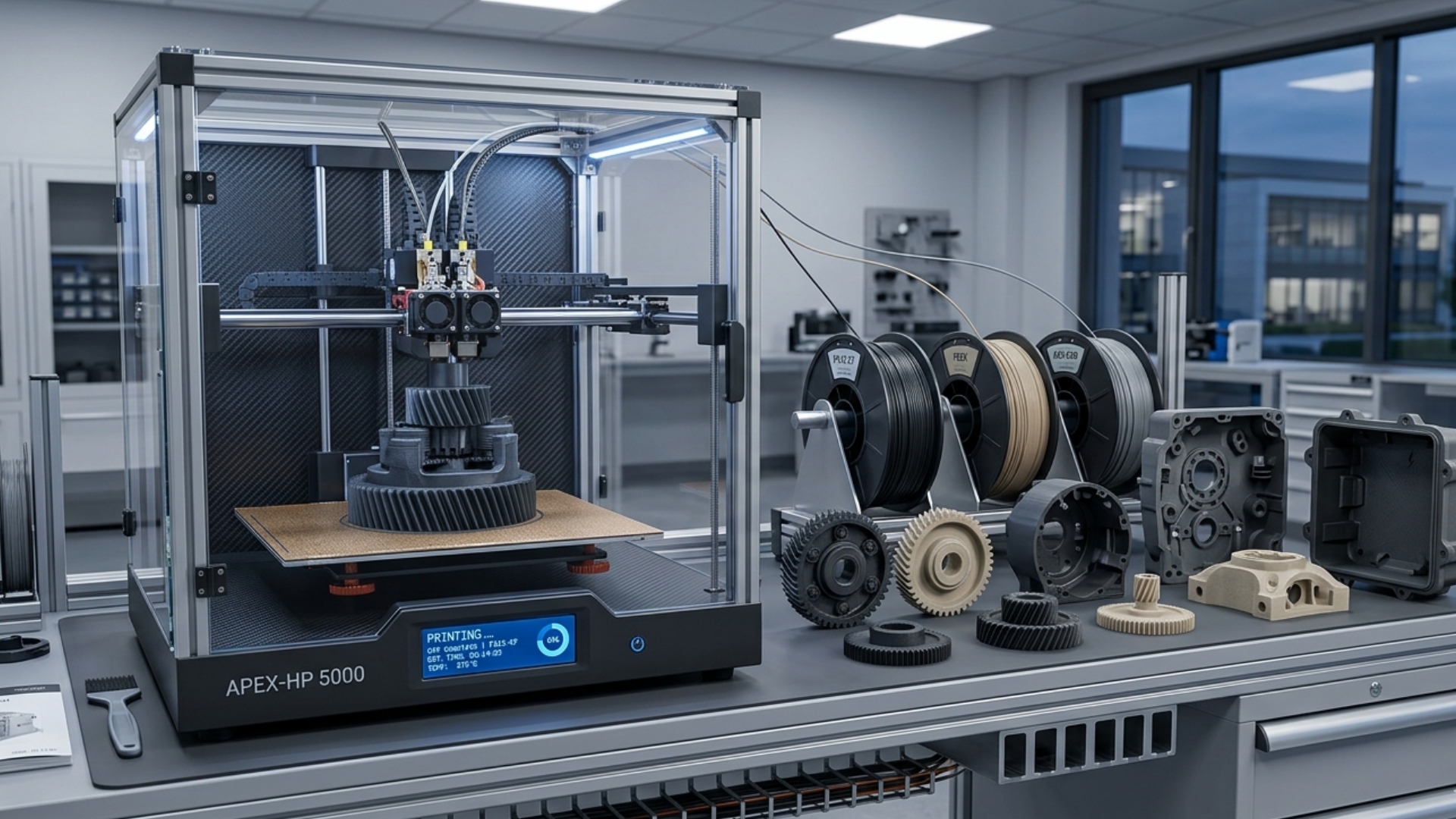
Out of nowhere, studies into 3D printed substances began uncovering powerful plastics – PEEK, PEKK, even ULTEM. These aren’t random acronyms; they group under broader types, say PAEK or PEI. Performance drives their design, yet each behaves differently when shaped by heat and motion. Materials once rare now appear more often in tough applications. Discovery didn’t happen overnight – it took layers of testing, trial, surprise.
Heavy-duty plastics stand tall alongside top materials in handling heat and stress. Not only do they resist wear, they weigh far less than metal parts. Because of their lightweight strength, planes, cars, and medical tools often rely on them. These industries choose such plastics without hesitation.
Most of these materials now get made using FDM, though some appear as powders suited for SLS instead. A machine needs certain specs – like a build surface hitting 230°C, nozzle heat up to 350°C, plus an enclosed area – to handle high-performance plastics properly.
High Impact Polystyrene In 3D Printing
A plastic called High Impact Polystyrene works well for support parts in FDM printing – much like ABS in many ways. Yet it stands apart because it can vanish when soaked in limonene, a citrus-based solvent. While most plastics stay put, this one breaks down fully. Its solubility makes cleanup easier after prints finish. Not every filament does that.
Smooth to the touch, it holds up when hit hard. Built for tricky shapes, machining this material goes without trouble. Light in weight yet strong enough for daily knocks. Water hardly bothers it. Expense? Not here – pricing stays low without cutting corners.
Yet the thing gives off sharp smoke, meaning open spaces work best. Without steady warmth flowing through, the pathways gum shut while printing runs.
Polypropylene Use In 3D Printing
Starting off strong, polypropylene stands as a common thermoplastic found across cars, work clothing, and countless household items. Resistance to wear comes naturally to this material, while handling bumps without cracking helps it stay useful. Stiff when needed yet able to bend under pressure gives it an edge. Its balance between firmness and give makes it fit many roles.
What about the weak points? Poor heat tolerance marks polypropylene, alongside vulnerability to sunlight. Exposure leads to swelling over time. Some producers tackled these issues by crafting modified versions – materials alike yet tougher. These new forms hold up better under stress and strain.
HP recently launched a genuine 3D printing polypropylene material – HP 3D High Reusability PP – for Multi Jet Fusion technology that offers the same properties as many PP materials used with traditional manufacturing methods.
Composites And Fiber Reinforced Materials In 3D Printing
Lightweight yet tough components? That’s where composites really shine. Thanks to embedded fibers, strength goes up – without any extra heft. Because of this fiber boost, they often carry the name Fiber Reinforced Materials, or FRM.
Chopped strands under a millimeter long go into standard 3D Printing Service Malaysia when making short fiber versions. Because they add stiffness, these tiny bits also boost part strength just enough. Nylon, ABS, or PLA take those small reinforcements well during mixing. Continuous fiber types differ entirely in structure. One kind breaks down fast while the other runs through entire shapes.
Starting mid-sentence, fibers mixed into thermoplastics boost strength during production. Carbon fiber shows up most often in 3D printed items. Glass fiber appears sometimes. Kevlar makes an appearance now and then.
What Kinds Of Dissolvable Substances Work In 3D Printing?
Later on during production, some materials dissolve by design. Most often, those filaments are called HIPS and PVA. While PLA works well alongside PVA, ABS pairs better with HIPS. Water alone breaks down PVA without effort. Limonene is needed if you want to get rid of HIPS cleanly.
Water dissolves BVOH faster than it does PVA, making this filament stand out. Not long ago, few paid attention. Now it shows up more often in dual-extrusion setups. Printers handle it better these days. Its popularity grows quietly, without fanfare.
Using PVA Plastic in 3D Printing?
PVA dissolves in water, so people often turn to it as an adhesive or a way to add thickness. Yet its role shifts dramatically during 3D printing – here, it rarely becomes part of the finished object. Instead, think of it stepping in where shapes might bend too far or break under their own form. Support arrives quietly, holding up only what needs help until heat or moisture washes it away.
Water dissolves the PVA supports once printing finishes. One extruder lays down the main build material at the same time another places PVA for temporary frames. Structures made this way come apart cleanly after a soak. Each tool in multi-extrusion setups handles separate jobs without slowing things down.
The choice of plastic used in 3D Printers Malaysia and additive manufacturing depends greatly on the application, durability requirements, flexibility, and overall performance needed for the final product. Materials such as PLA, ABS, PETG, Nylon, and TPU each offer unique advantages for prototyping, industrial production, engineering, and consumer applications. Understanding the strengths of each material helps businesses and creators select the most suitable option for achieving reliable and cost-effective results. To learn more about selecting the right 3D printing material for your next project, connect with us for professional assistance and customized solutions.
