



Table of Contents:
Introduction
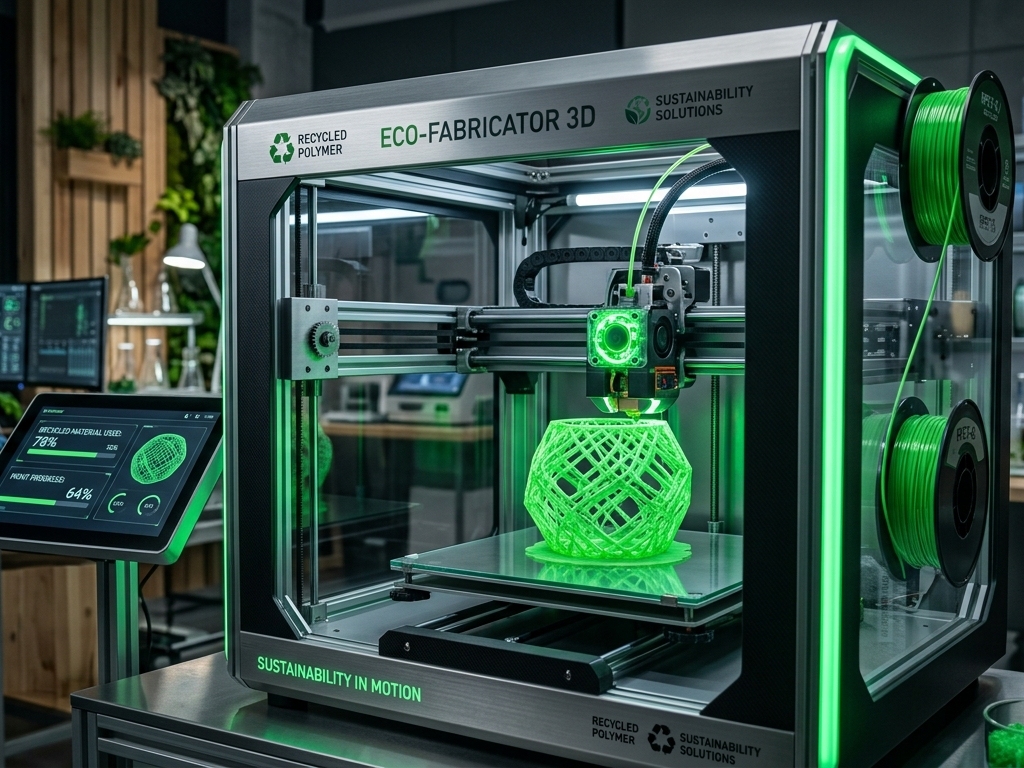
3D Printing Plastic Service combined with plastic reusing offers an viable way to diminish squander and bolster supportability. By changing over plastic squander into fiber, it minimizes landfill utilize, diminishes request for unused plastics, and brings down vitality utilization and emanations. This approach advances a circular economy where materials are reused, empowering eco-friendly and customizable generation over industries.
What is 3D Printing?
3D Plastic Printing Service, or added substance fabricating, makes objects layer by layer from a computerized plan. Utilizing materials like plastics, metals, or gums, it empowers exact generation of models, custom parts, and imaginative designs.
Is Recycling 3D Printing Materials Possible?
Yes, but it depends on the fabric. Thermoplastics such as PLA, ABS, and PETG can be liquefied and reused. In any case, resin-based and adaptable materials are harder to reuse. Progressing advancements point to progress recyclability and sustainability.
Different Sorts of Plastics
- Thermoplastics : These mollify when warmed and set when cooled, making them recyclable. Common cases incorporate PLA (biodegradable) and ABS (durable).
- Thermoset Plastics : Used in resin-based printing, these solidify forever and cannot be remelted or effectively recycled.
- Elastomers : Flexible, rubber-like materials such as TPE. A few can be utilized in 3D printing, but reusing choices are limited.
How to Make 3D Printing Fabric from Plastic Waste
Plastic squander is collected, sorted, cleaned, and destroyed into granules. After drying, the fabric is softened in an extruder to shape fiber strands, which are cooled, spooled, and tried for quality. This bolsters a circular fabricating process.
Understanding Eco-Friendly Filament
Eco-friendly fibers are made from renewable or reused sources. PLA (plant-based and biodegradable), reused PETG, wood-filled PLA, and hemp-based fibers decrease squander, lower outflows, and deliver less harmful vapor whereas keeping up print quality.
Types of Reused 3D Printing Filaments
- PLA: Plant-based and biodegradable
- Recycled PETG: Made from reused plastics, durable
- Wood-filled PLA: Mixes PLA with wood strands for characteristic texture
- Hemp-based fibers: Lightweight, solid, and renewable
- Advanced Recycling Techniques for 3D Printing
- Chemical Reusing: Breaks plastics into fundamental atoms for high-quality reuse
- AI-Powered Sorting: Progresses exactness in isolating plastic types
- Closed-Loop Frameworks: Empower rehashed fabric reuse with negligible waste
- Fused Granulate Creation (FGF): Employments destroyed plastic specifically for printing
The Concept of Circular Manufacturing
Circular fabricating centers on reusing and reusing materials instep of disposing of them. It decreases squander, spares vitality, and bolsters economical generation. 3D printing fits well into this show through localized, on-demand fabricating and fabric reuse.
Uses of Reused Plastics in 3D Printing
Recycled plastics are utilized in design, furniture plan, car and aviation prototyping, and buyer merchandise like toys and instruments. This decreases squander whereas empowering imaginative, maintainable products.
Challenges of Recycling 3D Printing Plastics
Recycled plastics may lose quality over time, and defilement can influence quality. Sorting materials is troublesome, and thermosets are not effortlessly recyclable. Also, collection and handling costs stay high.
Innovations Driving the Future
Advancements such as AI-based sorting, chemical reusing, and fabric mixing are moving forward quality and ease of use. Including normal filaments and bio-based added substances improves quality and usefulness. Instruction on economical hones is too essential.
What We Infer?
Recycled plastic 3D Printing Service Malaysia bridges supportability and advancement. With continuous headways, it bolsters a circular fabricating framework that decreases natural affect whereas keeping up performance.
Top Companies vs. Year in this Domain
Patent movement from 2021–2025 appears shifting advancement trends:
- Procter & Bet: Expanded filings, cresting in 2025
- 3M: Reliable movement over different years
- Braskem & LG Chem: Development until 2023, at that point decline
- Borealis AG: Solid rise until 2023
- Dow Worldwide Advances: Later action (2023–2024)
- Avient Organization: Restricted action after 2021
- Institute of Chemistry CAS & Kao: No recorded filings in this dataset
- Legal Status of Licenses Doled out to the Beat 5 Companies in the Domain
- Procter & Bet: Solid worldwide portfolio with dynamic and allowed patents
- 3M: Differing filings with a blend of dynamic, pending, and passed patents
- Institute of Chemistry CAS: Centered primarily in China
- Braskem: Wide universal scope, particularly dynamic in the USA
- LG Chem: Solid nearness in Asia, with a few repudiated licenses in certain locales
In Summary
Curious about making things in a greener way using Plastic 3D Printing Service In Malaysia? Got thoughts on using old plastic in 3D printers? We’re listening. Maybe you’re diving into earth-friendly supplies, rethinking how products move through life cycles, or testing new ways to reuse waste – your take matters. Reach out to Abs Plastic 3D Printing Service Malaysia anytime by connecting with us.
