



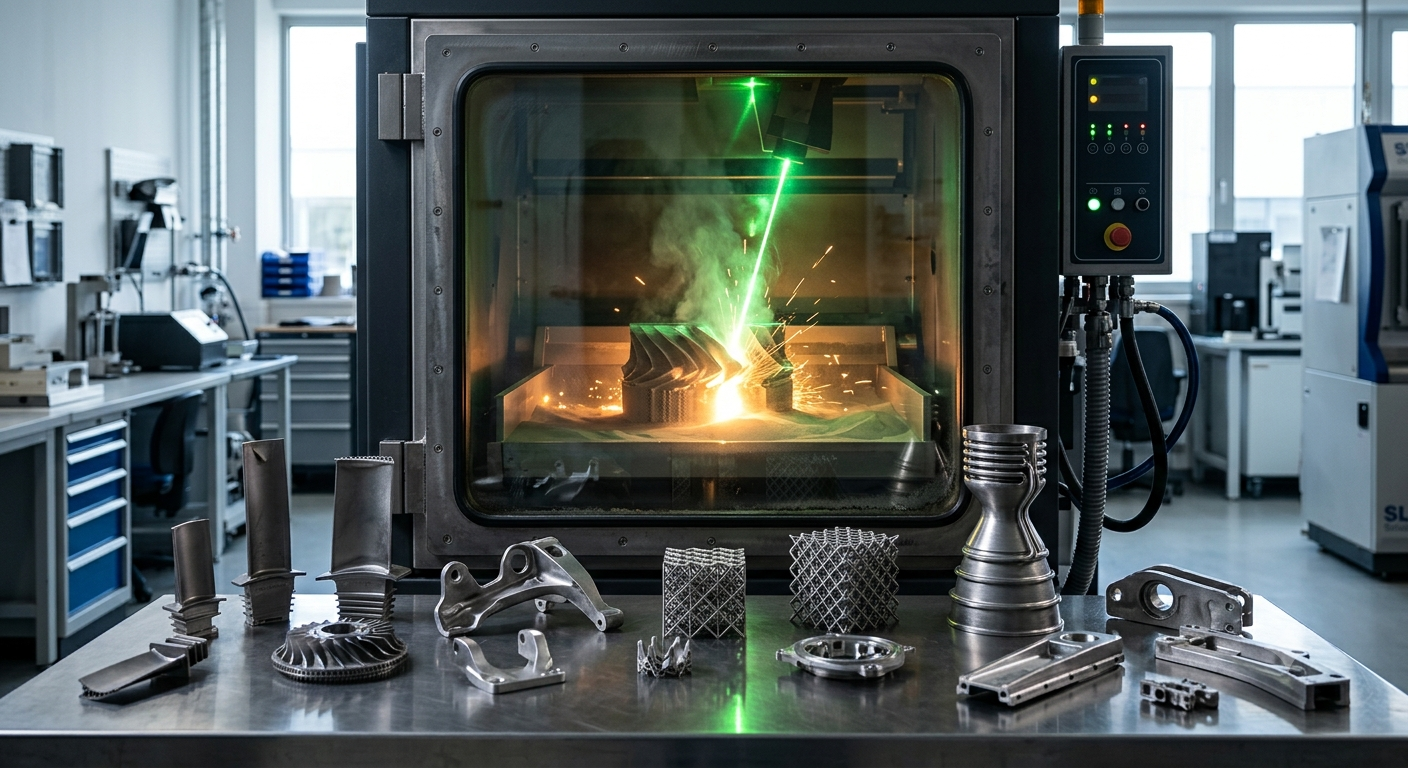
Have you ever wondered how long it takes for airplanes to obtain a new part? Something that would be stronger, lighter, and more efficient? Would it take a few weeks or even a month? With aerospace metal 3D printing, we can turn a hunk of metal into a useful, strong airplane part within a matter of days.
This new way of manufacturing is unlike anything we have ever seen before. The older ways of manufacturing airplanes and parts for them are extremely time consuming, require a lot of carving, and leave a large amount of waste.
With aerospace metal 3D printing, those problems go away, making Metal 3D Printing Malaysia an increasingly valuable solution for modern aerospace manufacturing.
The process knows what role Directed Energy Deposition plays in the aerospace world. Using metal powders, an energy source melts the metal and allows the printer to form it into the desired shape for the part.
Table of Contents:
Advantages of Metal Additive Manufacturing for the Aerospace Industry
Have you ever wondered how planes form their parts? How do they decide what the part looks like and what machines do they use to form the part?
With the traditional manufacturing process, the possibilities were limited. But, now with metal additive manufacturing, the sky is the limit! In this process, engineers are not limited to just machine formed parts as their design choice.
Design Freedom
With metal additive manufacturing, engineers are no longer limited to making machine formed parts, and in return not limited to parts that require a lot of cutting and waste. This type of manufacturing is done in layers. It makes certain parts much simpler to design and produce. Having a built-in channel for cooling was not an option with traditional manufacturing. With metal additive manufacturing, you can make lighter and more aerodynamic parts with the support of a 3D Printing Metal Service Provider Malaysia.
Faster Prototyping & Production
The traditional way of manufacturing parts meant that prototyping could take a few months. With metal additive manufacturing, you can build a part within days to shorten the cycle back to your design team. This process also helps production companies to meet their company goals sooner. Not to mention, you can build very light parts that provide strength and withstand high pressure.
Utilize Stronger Materials
The parts of a plane can be subjected to extreme elements. Metal additive manufacturing helps these parts be produced quickly and efficiently. It also helps you utilize materials such as titanium or nickel alloys that are stronger than materials that the traditional manufacturing process uses to make parts. These lighter yet stronger parts can be used in the aerospace industry to make structural parts and other critical parts for a plane that would make the industry successful through Metal 3D Printing Service Malaysia.
Why Aerospace Companies Choose Us
We produce flagship technology to manufacture and repair metal parts with repeatable precision.
The aerospace industry has changed because of the amazing technology that provides to the industry through their manufacturing facilities. With a partner such as us at your disposal, you can make the most intricate pattern flawless with any manufacturing process you choose. If you are looking for a trusted 3D Printing Service Online, get in touch with our team to learn how advanced metal 3D printing solutions can support your aerospace manufacturing requirements.
Frequently Asked Questions
Q1: What is aerospace metal 3D printing?
Aerospace metal 3D printing refers to additive manufacturing processes that create metallic parts by fusing or binding metal powders or materials together layer by layer. It typically involves technologies like Electron Beam Melting (EBM) or Directed Energy Deposition (DED) to produce a metal component by “printing” it out like a paper printer only with metal in very thin layers until a complete part has been formed.
Q2: Why should we choose metal 3D printing over traditional casting and machining methods?
Metal 3D printing (also referred to as metal additive manufacturing) lets designers and engineers make much more complex parts while using less material (resulting in less waste), and producing end-use parts faster, including unique items impossible to make with traditional methods or requiring extensive assembly of machined parts.
Q3: Can parts made with metal 3D printing be strong enough to actually be used in aircraft and spacecraft?
Yes, the metal 3D printing process can allow for the fabrication of metal parts made from titanium or nickel alloys that are strong and durable enough to withstand the extreme forces of launch and landing.
Q4: Does this technology allow us to make lighter parts? Why is that important?
Yes, the metal additive manufacturing process can make parts much lighter than conventional processes. In aerospace, that can make an enormous difference in terms of fuel savings and overall efficiency.
Q5: What sorts of parts can be made with aerospace metal 3D printing?
Many different types of parts can be made with this manufacturing process, including various kinds of aircraft engine parts, structural aircraft parts, brackets, engine mounts, or any other part needed for a plane or spacecraft. This technology can also often be used to make replacement parts when a plane needs one.
Q6: Is this manufacturing process much faster than conventional methods?
Yes, the amount of time needed to produce a part with metal additive manufacturing can be much faster than traditional techniques. Instead of weeks or even months, casting, machining, welding, and assembling metal parts can be accomplished in days or a few weeks with 3D printing technology.
Q7: Can aerospace companies do repairs on parts with this technology instead of just throwing them away and getting new ones?
Yes, many companies in the aerospace field can do certified repairs on certain types of damaged parts using this type of additive manufacturing technique, repairing only the damaged area rather than replacing the whole part.
Q8: Are there any cost advantages to using this technology?
Many times, parts made with additive manufacturing can be much less expensive than conventional parts since you’re not having to waste as much material, spend as much time assembling the part, or using as many specialized tools or molds. Choosing a 3D Printing Company In Malaysia can also help businesses access advanced manufacturing capabilities for aerospace applications.
Q9: Are there any limitations or disadvantages to using this additive manufacturing technology?
Some limitations of this technology include ensuring that a part is suitable and certified for aerospace application, potential need for further post-processing, and possible higher material costs for certain metals or additional safety concerns around handling metal powders or wires.
Q10: Why do aerospace companies choose us for all their metal 3D printing needs?
We offer certified aerospace additive manufacturing solutions, uses a variety of high-performance aerospace metals, provides faster lead times, and has reliable repair or build-from-scratch capabilities, allowing these companies to provide the aerospace industry with quicker access to mission-critical flight parts, structures, and components.
