



Have you ever wondered how your favorite video game characters are brought to life or how futuristic buildings and products are made before they are actually constructed in the real world? These are all made possible by three-dimensional modeling. It’s the charm of all Hollywood blockbusters and most interactive video games. Additionally, it is a part of innovative product concepts and state-of-the-art medical technology.
The global custom 3D modeling service Malaysia market is growing at a rate of around 25% and has reached multi-billion-dollar valuations in recent years. This quick growth shows how 3D modeling has developed from a fad in technology to an essential tool in practically every industry. 3D modeling is opening up new opportunities for designers, engineers, architects, and artists as the world continues to evolve digitally.
Table of Contents:
What is 3D Modeling?
In essence, 3D modeling is a process that uses software to create a three-dimensional representation of an object. In contrast to conventional two-dimensional (2D) drawings or photographs, three-dimensional (3D) models are digital spaces with depth, height, and width. You can view from any angle thanks to this capability. It’s similar to setting up a virtual sculpture; once the basic shape is finished, you continue to add details and realism until it looks like what you had in mind.
Simply said, 3D modeling is the digital counterpart of creating a physical model without the constraints of space or materials. The final result is a 3D object that can be viewed and worked with in a digital setting for application in a variety of sectors, including manufacturing and animation.
Process of 3D Modeling
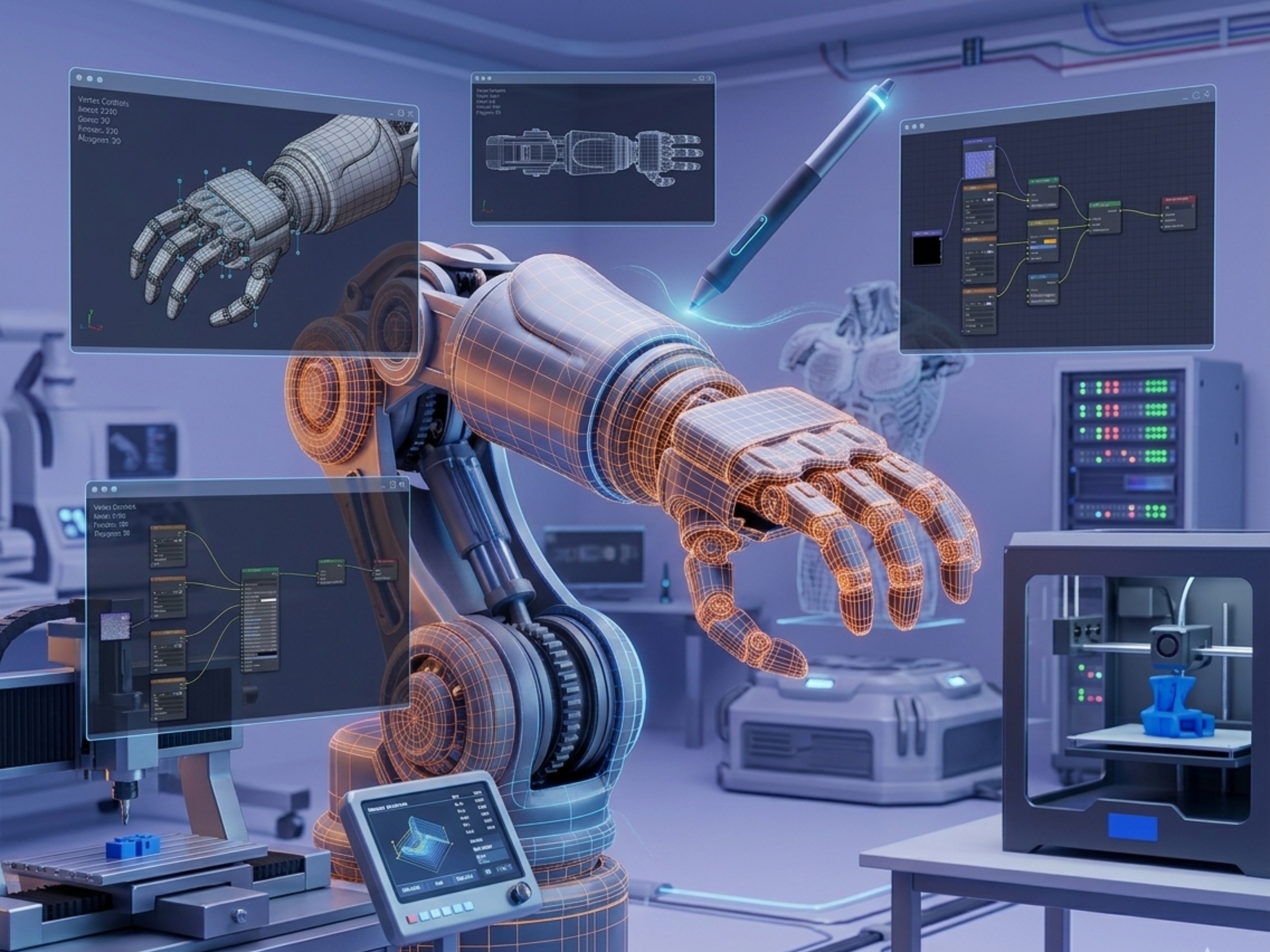
The process of dissecting items into smaller polygons and then combining them to create a 3D representation that can be altered on the screen of your computer is known as 3D modeling. The vertices (points), edges (lines), and faces make up the majority of the 3D models. Each polygon’s position on the model is determined by its vertices, and its connections to one another are defined by its edges.
This type of modeling, known as polygonal modeling, was and remains the standard for creating digital 3D models for animation, illustration, video games, broadcast design, and visual effects projects for film production firms worldwide. Because polygonal modeling uses less memory than other techniques, the 3D things created with it are incredibly effective. Thus, even with restricted resources, such as a low-power PC, an artist would like this approach. The following steps are commonly included in the 3D modeling process:
- Conceptualization
- Modeling
- Texturing
- Lighting and Renduring
Why is 3D modeling used?
Designing, creating models, and engaging with our surroundings have all been transformed by 3D modeling. 3D models offer a level of precision and depth that was previously unattainable for everything from the most intricately designed video game character to the creation of real-world things. It’s time to examine some of the many fascinating applications of 3D modeling if you’ve ever wondered how your favorite video games, animated films, or truly cool high-tech devices are transformed. Let’s explore some incredibly intriguing and useful uses for this tool.
1. Game Development
Game development is the most common application of 3D modeling. Characters, scenery, props, and the game’s whole map are all made using 3D models. 3D models are used by game developers to create interactive elements and realistic scenerios. Because players can enjoyably explore virtual environments from any angle and with their surroundings, this enables deeper immersion.
Key Stats and Impacts:
- 2024 saw the worldwide video game market hit $282 billion, with virtual reality and 3D modeling contributing significantly to the development.
- Many video games, such as Red Dead Redemption 2, are able to have amazing graphics and characters because 3D modeling is used in the creation of each aspect.
2. Virtual Reality and Augmented Reality
Virtual and augmented reality are the second most significant applications of 3D modeling. 3D modeling is the foundation of these two incredible technologies, which have entered every industry worldwide. For immersive experiences, 3D objects and settings are crucial to both AR and VR. With virtual reality (VR), users may fully experience an artificially computer-generated environment that includes everything they can see, hear, or even touch in three dimensions. These virtual 3D elements are superimposed on reality in augmented reality, making them visible through devices like smartphones and AR glasses.
Key Stats and Impacts:
- By 2029, the AR/VR market is projected to have grown from $22.12 billion in 2024 to $96.32 billion.
- Before performing surgery on actual patients, medical students can rehearse procedures in a simulated setting using 3D models.
3. 3D Printing
Additive manufacturing, or 3D printing, is a significant application of 3D modeling. 3D printing has revolutionized a number of industries, including aerospace and healthcare. The technique of 3D printing, which transforms digital objects into actual ones layer by layer, uses 3D models as blueprints. An object must first be digitally modeled in order to be 3D printed. With the use of 3D modeling software, engineers and designers can produce precise, intricate designs that are subsequently printed out using 3D printers.
Key Stats and Impacts:
- The market for 3D printing is predicted to expand by more than 25% annually, with industries like healthcare likely to drive this expansion.
- Custom prostheses and bioprinted tissues for medical research or transplantation are now possible thanks to 3D printing.
4. Architecture and Building
Buildings, bridges, and even full urban planning are designed and visualized using 3D modeling. Before building starts, architects utilize 3D models to make intricate plans, model structural integrity, and test concepts in a virtual environment. Before beginning the actual construction, architects can use 3D modeling to produce virtual walkthroughs of buildings that allow clients to see the final design and make suggestions for improvements.
Keys Stats and Impact:
- 3D modeling is incorporated into Building Information Modeling (BIM), which facilitates smart work and is projected to lower construction costs by 20% and project durations by 70%.
- Many famous buildings, including the Burj Khalifa, were created with 3D modeling, which makes it simple for architects to plan intricate designs.
5. Product Design
Before their concepts are produced, product designers visualize, prototype, and improve them using 3D models. Designers can test a product’s functionality and appearance using 3D modeling. In actuality, 3D modeling offers a virtual world in which they can alter every element, from a car seat’s shapes to a smartphone’s shape, and observe how it fits into the overall design.
Key Stats and Impact:
- By 2028, the global market for product prototyping using 3D printing alone is expected to reach a valuation of more than $20 billion.
- Because 3D printing shortens the period from concept to prototype, it has completely changed product design. Before being produced and used, Apple’s iPhone, Tesla automobiles, and other items were developed into sophisticated 3D models to guarantee the best possible performance and user experience.
6. Animation
Animation is ubiquitous. Characters, actions, and environments are created using 3D models in Pixar movies, video games, and instructional simulations. Objects, animals, and environments are created using 3D modeling and then animated to make them come to life. It might simply be a character’s facial expressions or the way a car is traveling down the road. These models are used by animators to create more lifelike movements and fluidity that give figures a genuine appearance despite their fictional and technical nature.
Key Stats and Impact:
- The global animation industry was valued at $270 billion in 2023. A significant portion of the industry heavily depends on 3D animation.
- Movies like Frozen and Avatar have demonstrated the power of 3D modeling and animation by producing effects that captivate viewers and generate thousands of dollars in sales worldwide.
Comparison with 2D methods
Although 2D design and art have been around for ages, 3D modeling advances the field by introducing dimension and interactivity. Because 2D design is made in a flat style with just height and width, it produces a static, fixed view that primarily concentrates on images. It is frequently utilized in fields like print and graphic design and provides a limited degree of realism. In contrast, items may be viewed from various angles and viewpoints because to 3D design, which incorporates height, width, and depth. Additionally, it allows for animation, rotation, and interactivity, resulting in stylized or extremely realistic representations. These features make 3D design a popular tool in industries including building, animation, and gaming.
Conclusion
In conclusion, it is evident that this technology is a revolutionary force that is changing industries all over the world and is not only for engineers and designers. 3D modeling describes how dreams become reality, from the most sophisticated developments in virtual reality and gaming to precise product design and construction.
The tools and opportunities that result from 3D modeling will surpass the limits of creativity due to technological advancements. Innovation in technical development is supported by 3D modeling. The global market for 3D modeling and 3D scanning service in Malaysia is predicted to surpass $16 billion by 2026, which is not surprising given the wide range of businesses that have embraced this technique, including medical technology, animation, and 3D scanning. This is the future of design, engineering, and creation itself—it is not merely a fad.
Therefore, learning 3D modeling would open the door to all of this and more, regardless of your background—a beginner artist, a budding product designer, or an architect. The physical world is still being shaped by the virtual world, and 3D modeling will be crucial to this future change.
Would you like to use sophisticated digital design and 3D modeling to realize your ideas? We have a staff available to assist. We can help you from concept to completion, whether you require assistance from a 3D Scanning and 3D Printing Specialist with product design, prototyping,3D Architectural Modeling Service, or 3D printing solutions.
For more information about our 3D scanning and modeling Malaysia or to discuss your project, contact us right now. Our professionals are prepared to assist in transforming your idea into a comprehensive and useful 3D model service. Start your project in right now by reaching out to us.
